Laparoscopic Oophorectomy (Ovary Removal)
Surgical treatment of ovarian pathologies with minimal trauma
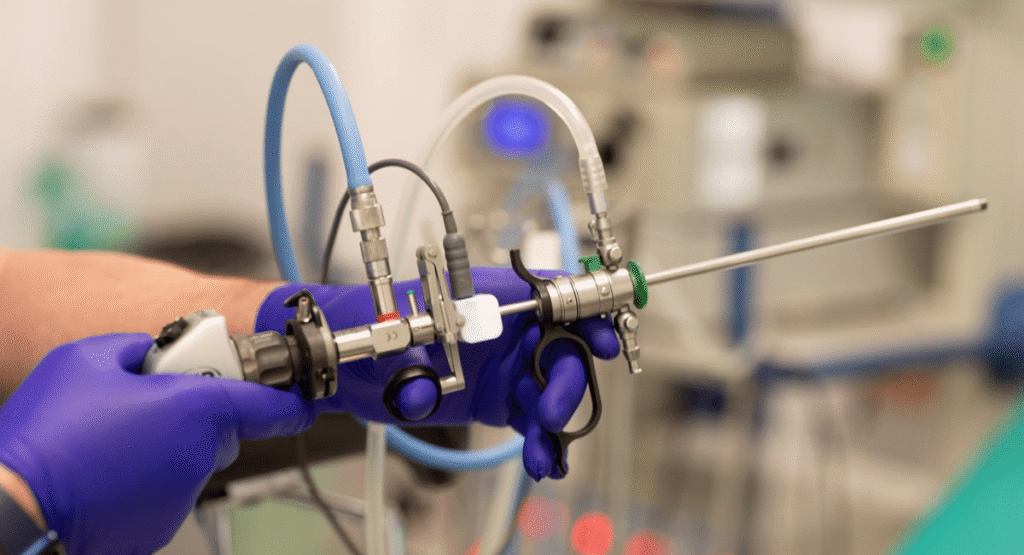
Laparoscopic oophorectomy is an operation for the complete removal of one or both ovaries. At St. Luke’s Clinic, we perform this intervention using a minimally invasive method (laparoscopy): through 3–4 small punctures in the abdominal wall, without a wide incision. This minimizes pain, avoids coarse scars, and reduces hospital stay to 1–2 days.
When is ovary removal necessary?
Our gynecologists fight to the last to preserve ovarian tissue (performing resection or cyst removal). However, there are conditions when organ removal is the only safe solution:
- Large tumors or cysts that have completely replaced healthy ovarian tissue.
- Suspicion of a malignant process (oncological alertness).
- Ovarian torsion with necrosis (tissue death).
- Purulent abscesses that do not respond to conservative treatment.
- Severe forms of endometriosis with destruction of the organ’s structure.
- Hormone-dependent breast cancer (as a method to reduce estrogen levels).
Unilateral and bilateral oophorectomy: what you need to know
- Removal of one ovary (unilateral):
If the other ovary is healthy, it fully takes over the hormonal function. The woman retains her menstrual cycle, youth, and ability to bear children. The operation does not affect the quality of sexual life. - Removal of both ovaries (bilateral):
Performed in cases of bilateral lesions or during menopause. If the patient is of reproductive age, our doctors select hormone replacement therapy (HRT), which helps avoid severe menopausal symptoms and maintain good well-being, skin, and bone health.
Advantages of laparoscopy at St. Luke’s Clinic
- Safety: The operation is performed under high-resolution video control, allowing the surgeon to clearly separate the ovary from surrounding tissues without damaging blood vessels and ureters.
- Aesthetics: Puncture marks (0.5–1 cm) heal quickly and become almost imperceptible over time.
- Fast rehabilitation: Within a few hours after the operation, the patient can get up, walk, and eat light food.
- Minimum pain: The absence of a large incision significantly reduces the need for painkillers after the intervention.
How is the treatment performed?
Before the operation, you undergo a complete examination (ultrasound, tumor markers, tests). The intervention is performed under general anesthesia in a modern operating room. The removed organ is necessarily sent for histological examination to accurately determine the nature of the disease.
Entrust your health to professionals. Make an appointment for a consultation with a gynecological surgeon at St. Luke’s Clinic.